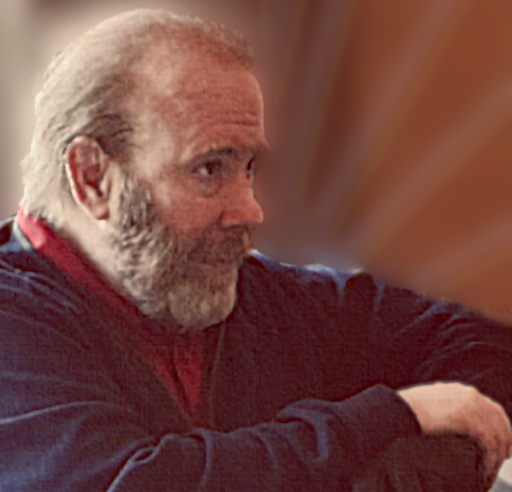
Today is the Sunday after Christmas Day. It is also, this year, New Year’s Eve, in the civil calendar; which means it is the Eve, the Vigil, of the Feast of the Circumcision.
From that, it should be obvious that this is a post of limited interest—as regards, at least, its likely audience, if any. More specifically, it is directed to that subset of my readers and listeners who are Christian; who are Christian in a liturgical tradition; and, to be perfectly blunt, are, largely, my fellow Anglicans. We are going to speak briefly about the Daily Offices and the Book of Common Prayer.
I am an aging man. I am not in the best of health. It is impressed upon me, as it is not always impressed upon us, that every day or any night could be my last in the body, without warning. This is something of which we ought all to be aware in ourselves, however young, however healthy; but, as Dr Johnson once said, the prospect of being hanged in a week concentrates a man’s mind wonderfully. We tend to give lip service, if we think of it at all, to the truth that any night our souls may be required of us; we rarely give more than lip service. Age and ill health motivate one to do better.
In any case, whether you attribute it in me to undignified fear or to hard-won experience, I read the Daily Offices to myself, Mattins and Evensong, Morning Prayer and Evening Prayer, daily. I find it useful, and I find it comforting. I do not insist that anyone else do. I am addressing myself to those who do.
To paraphrase Will Rogers, I am not a member of any organized religious denomination: I’m an Anglican. We are a disorganized lot. So, tedious as it is, it is practically a necessity that I put my cards on the table (exclusive of any aces up my sleeve) and further define my particular strand of Anglicanism. I am traditionalist and orthodox; I am a believer in the 1662 and the 1928; I do not believe in the validity of the ordination or purported ordination or attempted ordination of women to Holy Orders other than that of deaconess; I am conservative in my churchmanship, and High Church to the point of Anglo-Catholicism, but a resolutely Prayer Book High Churchman. I think Douglas Adams was inadvertently right when he wrote that 42 is the answer to life, the universe, and everything: because 42 is the sum you arrive at when you add together the three Creeds and the 39 Articles. I equally believe that the 39 Articles are to be read in the light of their Tractarian exegesis. I believe in the Lambeth Quadrilateral and the Anglican tripod of Scripture, reason, and tradition. I adhere to branch theory on an Anglo-Catholic basis.
You may very well not. So, for the handful of you who have not yet closed your tab, closed your entire browser in disgust, or thrown your device across the room in a fit of righteous anger, denouncing me and all my wicked views, let’s go on.
I am a firm adherent of the BCP. Certainly this is in part a function of literary taste: the 1662 and the 1928 are far better written, from a purely secular view, a purely literary view, than are the meager substitutes which have been proffered us in their place. But the Church is not a literary society. It must however be a literate one: and that must include theological, and thus liturgical, literacy. Lex orandi, lex credendi—and it ought to entail lex vivendi as well—is not merely a Latin tag to be used so we sound clever. But the point of the Book of Common Prayer is that it is a book of common, of communal, prayer. Explicitly or implicitly, it contains a very full and rich diet. But private prayers deserve our attention. Sometimes, specificity is called for, not in order to tell the Almighty something He may have overlooked, but to recall it to ourselves.
The C of E may be on life support; TEC is DOA and awaiting only the declaration. And the difference is that the C of E has AEO. TEC does not: wherefore, ACNA. That is one way in which Anglicans in the United States can find themselves without a local parish which they can in good conscience attend; and thus be thrown back upon the resource of the BCP and upon daily private devotions. Health issues may do the same; or so may the press of duty to others: no one rightly expects the paramedic, the veterinary surgeon, the soldier, the farmer, the lawyer, or the physician always to be in a position to make it to Mattins and Evensong every day. Yet it is a good and healthy thing for all of us daily to say the Offices, however privately. The 1928 US BCP contains forms for family Mattins and Evensong, and even short forms of both for when time and duty presses. I alternate those every other day; you might be interested to try it yourself. These include extra collects; the 1662 has admirable set Prayers and Thanksgivings; yet health, bodily dexterity, declining vision, or duties in service to our neighbors, may even then leave us pressed for time.
I am not here to tell you what to do: I am a mere layman, and I am not a particularly good man. I have neither priestly nor moral authority to lecture you or to sit in judgment upon you. I am here to tell you what I do, which you may or may not find helpful or of use in your own practice of specifically private prayer.
There are the psalms, both those of the liturgical and those of the monthly day, the lessons, and the Gospels and Epistles appointed for each day, and I begin with these. I do so, as to the psalms, in their regular rotation, precisely so as not to concentrate only on those which are personal favorites of mine or which do not confront me with discomfort and the need of self-reflection. One month, it should be the first of the daily psalms, in the next, the second, in the next, the third, and so on. And let me pause to point out that at this season especially, it is easy to see a special genius in the choice of the readings appointed for each day and each season. Just now, we got the 40th chapter of Isaiah and the second of Saint Luke at the same Mattins: which means, respectively, a significant chunk of the libretto for Handel’s Messiah and the source of the Nunc dimittus. Try reading those without humming.
And then of course there are the formularies, there is the text. I do not recommend omitting or treating as optional the daily collect. It comforts, it helps, and it is invariably brilliantly written, both literarily and theologically as a matter of liturgy.
Yet I have implicitly promised you what is nowadays called a ‘hack’ for your use when time presses or when the implicit needs to be made explicit. Well: here it is. In most cases, there is a collect for these things. We’re Anglicans: we have a collect for everything. All the same, you may not have the time or the bodily energy or the manual dexterity to collate all these collects and to read or say them.
Do not despair, and do not give up. Not all is lost. All is not lost. Nothing is ever truly lost. Not here; not in this endeavor.
Even in the shortest form, there are places and passages where it is not only possible, but is specially apt, to insert what should otherwise be omitted, to say what should otherwise go unspoken, to make explicit the implicit. A few days of familiarity in and from reading the Offices daily shall show you where these are.
Here, for whatever worth it may be to you, are the unspoken parts I say aloud.
I pray for the peace of Jerusalem and for the rest, the repose, of the faithful departed.
I pray God to deal tenderly according to His covenant with His people Israel; and to reform, and, having reformed, so to sanctify and stablish, His holy church: that she may once more be, and ever hereafter remain, holy, faithful, and orthodox.
I pray God that He mightily defend all free nations and peoples; that He grant swiftly, and without further effusion of innocent blood, complete and irreversible victory to Ukraine and to the State of Israel; that by His sovereignty, He prevent any successful use of weapons of mass destruction; that He liberate everywhere the oppressed, and cast down utterly, even unto the dust, all oppressors, aggressors, terrorists, and tyrants; and that He advance the cause of liberty and, with the victory of the free, make war to cease upon the earth.
I pray that He specially bless the United States, her president—rarely as I personally like or support any one of them of either party—, the Congress (same caveat), and the judiciary (need I say it?), turning her people again to our old love of liberty and reverence for the Constitution as we have received it; the United Kingdom, and His Majesty’s Government and judges, continuing the same united and a kingdom, and making the same swiftly to prosper outside the EU; the ROC, the ROK, Ukraine, the State of Israel, the NATO member states, and the Commonwealth nations; in all cases granting wisdom to their governors and so moving the hearts of their peoples that no unworthy person ever, or ever again, hold any office of trust or profit thereunder.
I pray that He of His mercy send all of us in our several necessities and situations temperate and seasonable weather, defending us from all natural disaster and granting us plenty and cheapness in place of dearth; and that He lift from us the current poxes, plagues, and pandemics.
I pray His comfort and blessing upon family, friends, and neighbors, by name; upon the Bench and Bar—laugh it up, fuzzball, but the less you think of them the more you must admit they need it—; upon all healers, and upon all creators, that their hearts may be turned to Him and their talents to His glory and service; upon all domestic and companion animals, beasts, cattle, and livestock, and all His animal creation; upon the congregation of His poor, the homeless and neglected of men, those who walk in mental or spiritual darkness, the old, the ill, the shut-in, the dying, all those in hospital and all those facing, undergoing, or recovering from medical intervention; all women laboring of child; all those fighting in a just cause; all who travel, by land, sea, or air; the widow, the orphan, and all them that do mourn; the refugee and the exile; all prisoners and captives, particularly of war, and all hostages, that He restore them swiftly and unharmed to their families; all those, by name, whom I know to be in difficulties of health or otherwise; and all those who, in this transitory life, are in trouble, sorrow, need, sickness, or any other adversity.
And I am not ashamed to admit that I pray for myself that He continue me, day by day and night by night, in the body until I shall be at least 80 years in age, without further hospitalization or the need of it, without being a further burden upon others, without further indignity, without further diminution in health, faculties, or material circumstance, doing daily and being able daily to do the duties of the day and to redeem the time thus given; and that, when, after I am 80, I do come to die, I not die alone and unattended. And I pray the same for all others.
(Personally, and I am not ashamed to admit this either, I also pray every year that the Astros win the World Series, and, in every Ashes year, that England win the Ashes; but this is clearly an instance in which we should all strive for unity-in-diversity, and you may support different teams and sides. Turn right at the next clivus and merge onto the Via Media. There: there’s your Anglican humor for the day.)
Some, all, or none of this may be of use or interest to you; take from it, if anything, what your conscience dictates and which may be of service to you. In any case, without any pretense on my part of special piety or special goodness, neither of which I possess, I hope you do not think it an impertinence to know that you are, by name, or by classification, or by category, in my prayers. And I trust that you are all doing well, as we have begun the new year of the Church and are beginning the new year of the civil calendar, and that you have all the blessings that are implied, here where I live, by black-eyed peas for good fortune, cabbage for folding money, notes, and sliced carrot for coins on New Year’s Day.
The Lord bless us and keep us. The Lord make his face to shine upon us, and be gracious unto us. The Lord lift up his countenance upon us, and give us peace, this day and evermore. And may the grace of our Lord Jesus Christ, and the love of God, and the fellowship of the Holy Ghost, be with us all evermore. Amen.
 Markham Shaw Pyle, author & historian